
Chevrolet Cruze Repair Manual: Removal Procedure
Warning: Refer to Cracked Window Warning in the Preface section.
Warning: Refer to Glass and Sheet Metal Handling Warning in the Preface section.
Note: Position the vehicle on level ground and move the front wheels to the straight-ahead position.
- Disconnect battery.
- Remove quarter window garnish molding. Refer to Windshield Garnish Molding Replacement.
- Disconnect the rear window radio antenna connector
- Disconnect the electrical connectors from the rear window defogger bus bars.
- Cover the following parts to protect from the broken glass:
- Upper dash pad
- Seats and carpeting
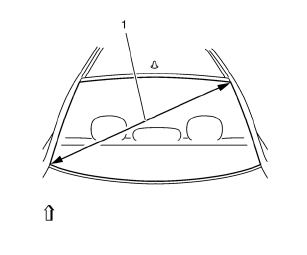
- Use BO-46974 system to remove the rear window
- Take the diagonal measurement (1) of the rear window.
- Cut cutting wire into four times lengths
Approximately 5400 mm (212.597 in), the circumference of the corresponding roll of wire is approximately 1000 mm (39.369 in).
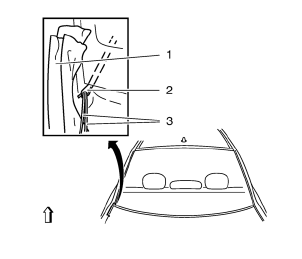
- Heat the awl with a suitable tool.
- Stick the awl through the adhesive bed in the area of the lower C-pillar (1).
Note: Ensure that the rear window is not damaged in the process. Otherwise, stress cracks could form in the rear window. Mask off the area with fabric tape (1).
- Pull the wire through.
- Thread both ends of the cutting wire (3) in the bores of the piercing awl (2) and bend them.
- Use the piercing awl to pull the cutting wire to the center of the rear window.
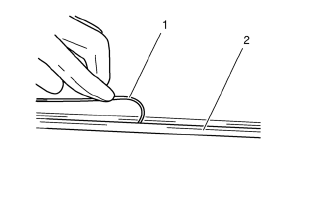
- Lay the wire under the rear window all the way round.
Pull the remaining wire into the interior.
Note: The cutting wire (1) should be rolled in beneath the rubber window seal (2) at the rear window.
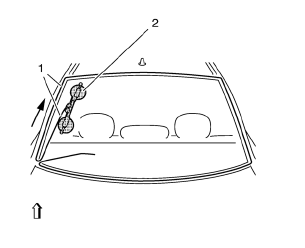
- Place the winch with two winding heads in the vehicle.
Note: Ensure that the cutting wire is fitted correctly to the winch deflection roller.
- Position the winch vertically at the same height as the C-pillar (2).
- Attach the cutting wire to the winch (1).
- Insert transfer ratchet and pre-tension cutting wire.
- Cut out rear window.
- Cut out the rear window until the cutting wire is level with the winch.
- Arrow shows the path taken by the cutting wire.
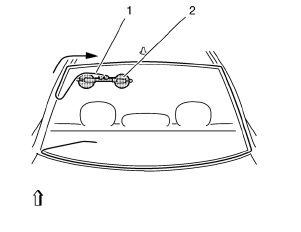
- Place the winch with two winding heads in the vehicle.
Note: Ensure that the cutting wire is fitted correctly to the winch deflection roller.
- Position the winch (2) in the area of the roof frame.
- Insert transfer ratchet and pre-tension cutting wire (1).
- Cut out rear window.
Note: Increased cutting effort is required in the area of the rear window radius.
- Cut out the rear window until the cutting wire is level with the winch.
- Arrow shows the path taken by the cutting wire.
- Cut out the rear window until the cutting wire is level with the winch.
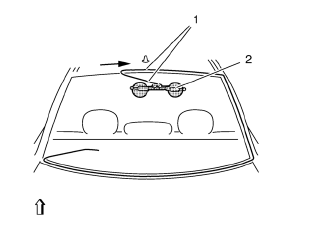
- Place the winch with two winding heads in the vehicle.
Note: Ensure Check that the cutting wire is laid correctly to the winch deflection roller.
- Position winch in the middle area of rear window (2).
- Insert transfer ratchet and pre-tension cutting wire (1).
- Cut out rear window.
- Cut out the rear window until the cutting wire is level with the winch.
- Arrow shows the path taken by the cutting wire.
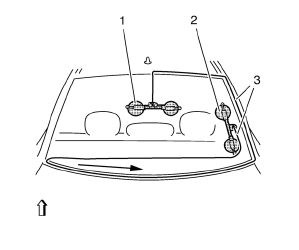
- Position the winch with one winding head in the vehicle.
Note: Ensure that the cutting wire is fitted correctly to the winch deflection roller.
- The winch with 2 winding heads (1) stays in the position.
- Position winch with one winding head (2) in the area of the lower C-pillar.
- Thread the second end of the wire (3).
- Insert transfer ratchet and pre-tension cutting wire.
- Cut out rear window.
Note: Increased cutting effort is required in the area of the rear window radius.
- Cut out the rear window until the cutting wire is level with the winch.
- Arrow shows the path taken by the cutting wire.
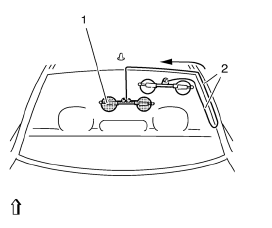
- Position the winch with one winding head in the vehicle.
Note: Check that the cutting wire is laid correctly at the winch deflection roller.
- Position the winch with one winding head (1) in the upper area of the rear window.
- Insert transfer ratchet and pre-tension cutting wire (2).
- Cut out rear window.
Note: Increased cutting effort is required in the area of the rear window radius.
- Cut out the rear window until the cutting wire is level with the winch.
- Arrow shows the path taken by the cutting wire.
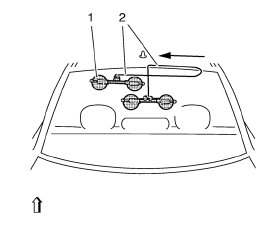
- Position the winch with one winding head in the vehicle.
Note: Increase that the cutting wire is laid correctly to the winch deflection roller.
- Position winch with one winding head (1) next to winch with two winding heads so that the cutting wire crosses (2).
- Insert transfer ratchet and pre-tension cutting wire.
- Cut out rear window.
- Cut out the rear window until the cutting wire (2) has cut through the adhesive bed completely.
- Arrow shows the path taken by the cutting wire.
- Remove glass removal system.
- Fit BO-641 holder
- Remove windshield.
Note: Second mechanic required.
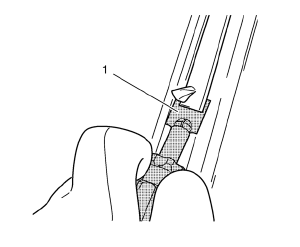
- Cut out the adhesive tape with the knife provided (1) to within 1 mm (0.039 in).
- Repair any paint damage.
Using a touch-up pen to match the color of the vehicle, repair any paint damage.
- If the rear window rubber is damaged, replace with a new one.
- Cut off the adhesive bead on the glass pane.
Cut out the adhesive tape with the knife provided (1) to within 1 mm (0.039 in).
 Rear Window Replacement
Special Tools
BO-46974 Glass removal system
BO-641 Suction Holder
For equivalent regional tools, refer to Special Tools. ...
 Installation Procedure
Remove all mounds or loose pieces of urethane adhesive from the
pinch-weld area.
Inspect for any of the following problems in order to help prevent
future breakage of the window:
High ...
Other materials:
Waterleak Test Preparation
GM vehicles are designed to operate under normal environmental
conditions.
The design criteria for sealing materials and components takes into
consideration the sealing forces required to withstand the natural
elements. These specifications cannot take into consideration any artificial ...
Relieving Fuel Pressure Warning
Warning: Remove the fuel tank cap and relieve the fuel system
pressure before servicing the fuel system in order to reduce the risk of
personal injury. After you relieve the fuel system pressure, a small amount of
fuel may be released when servicing the fuel lines, the fuel
injection pump, or ...
Basecoat/Clearcoat Paint Systems
Warning: Exposure to isocyanates during paint preparation and
application processes can cause severe breathing problems. Read and
follow all of the instructions from the manufacturers of painting materials,
equipment, and protective gear.
All paint finish repairs of rigid exterior surfaces mus ...
