
Chevrolet Cruze Owners Manual: Engine Heater
The engine heater, if available, can help in cold weather conditions at or below −18°C (0°F) for easier starting and better fuel economy during engine warm-up. Plug in the heater at least four hours before starting the vehicle. An internal thermostat in the plug end of the cord will prevent engine heater operation at temperatures above −18°C (0°F).
To Use The Engine Heater
1. Turn off the engine.
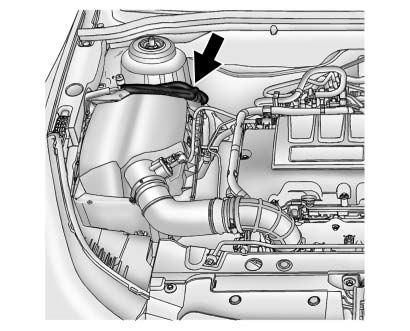
1.4L Engine Shown, 1.8L Similar
2. Open the hood and unwrap the electrical cord. The electrical cord is located on the passenger side of the engine compartment, behind the air cleaner.
3. Plug it into a normal, grounded 110-volt AC outlet.
WARNING
Plugging the cord into an ungrounded outlet could cause an electrical shock. Also, the wrong kind of extension cord could overheat and cause a fire. You could be seriously injured. Plug the cord into a properly grounded three-prong 110-volt AC outlet.
If the cord will not reach, use a heavy-duty three-prong extension cord rated for at least 15 amps
.
4. Before starting the engine, be sure to unplug and store the cord as it was before to keep it away from moving engine parts.
If you do not it could be damaged.
The length of time the heater should remain plugged in depends on several factors. Ask a dealer in the area where you will be parking the vehicle for the best advice on this.
 Starting the Engine
Place the transmission in the proper gear.
Notice: If you add electrical parts or accessories, you could change
the way the engine operates. Any resulting damage would not be covered by the vehicle ...
 Retained Accessory Power (RAP)
These vehicle accessories may be used for up to 10 minutes after the engine is
turned off:
• Audio System
• Power Windows
• Sunroof
The power windows and sunroof will continue to work for up to ...
Other materials:
Rear Spring Insulator Replacement
Removal Procedure
Raise and suitably support the vehicle. Refer to Lifting and Jacking the
Vehicle.
Support the rear axle with a tall jack stand near the shock absorber.
Remove the lower shock bolt. Refer to Shock Absorber Replacement.
Using the tall jack stands, slowly lower the rear a ...
Wheel Replacement
Replace any wheel that is bent, cracked, or badly rusted or corroded. If wheel
nuts keep coming loose, the wheel, wheel bolts, and wheel nuts should be replaced.
If the wheel leaks air, replace it.
Some aluminum wheels can be repaired. See your dealer if any of these conditions
exist.
Your de ...
Keys
WARNING
Leaving children in a vehicle with the ignition key is dangerous and children
or others could be seriously injured or killed. They could operate the power windows
or other controls or make the vehicle move. The windows will function with the keys
in the ignition, and children or other ...
