
Chevrolet Cruze Repair Manual: Removal Procedure
Warning: Refer to Approved Equipment for Collision Repair Warning in the Preface section.
Warning: Refer to Collision Sectioning Warning in the Preface section.
Warning: Refer to Glass and Sheet Metal Handling Warning in the Preface section.
- Disable the SIR System. Refer to SIR Disabling and Enabling.
- Disconnect the negative battery cable. Refer to Battery Negative Cable Disconnection and Connection.
- Remove all related panels and components.
- Visually inspect the damage. Repair as much of the damage as possible.
- Remove the sealers and anti-corrosion materials from the repair area, as necessary. Refer to Anti-Corrosion Treatment and Repair.
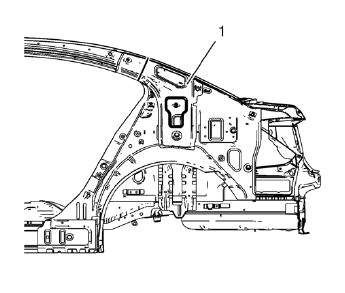
- Create cut lines on the body lock pillar upper reinforcement (1).
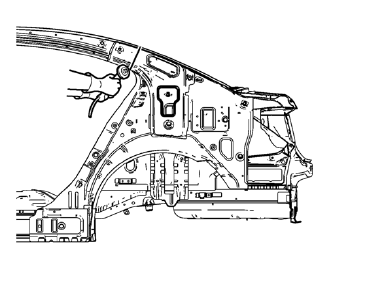
Note: Do not damage any other panels or reinforcements.
- Cut the panel where sectioning is to be performed.
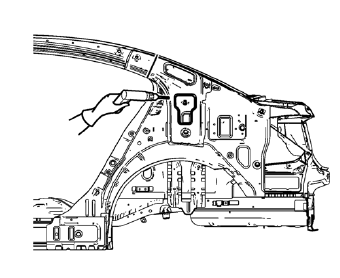
- Locate and mark all the necessary factory welds of the body lock pillar upper reinforcement.
- Drill all factory welds. Note the number and location of welds for installation of the service assembly.
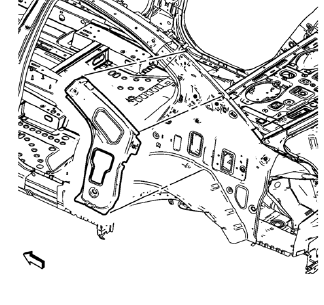
- Remove the damaged body lock pillar upper reinforcement.
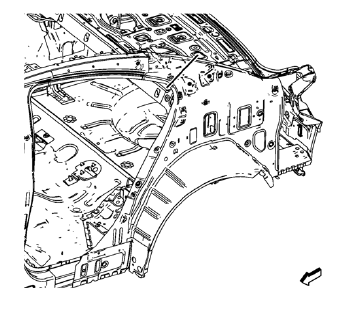
- Create cut lines on the body side inner panel.
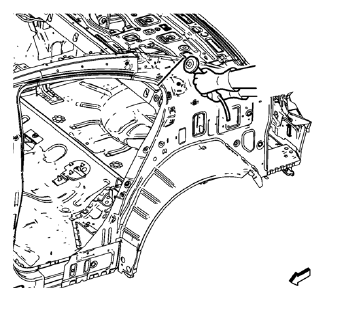
Note: Do not damage any other panels or reinforcements.
- Cut the panel where sectioning is to be performed.
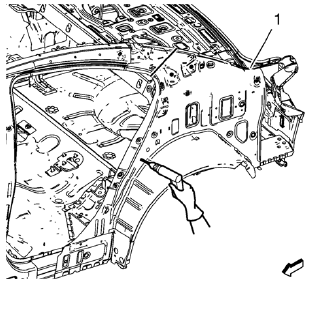
Note: Drill hidden factory welds where body side outer rear panel drain gutter (1) and body side inner panel overlap.
- Locate and mark all the necessary factory welds of the body side inner panel.
- Drill all factory welds. Note the number and location of welds for installation of the service assembly.
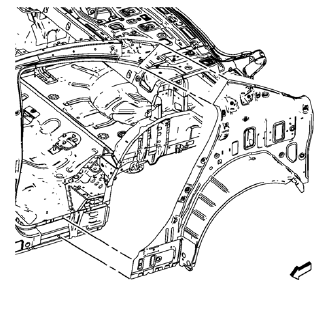
- Remove the damaged body side inner panel.
 Body Side Inner Panel Sectioning (MIG-Brazing)
Note: According to different corrosion warranties, only the
regional mandatory joining methods are allowed. ...
 Installation Procedure
Remove rear end upper panel extension (1) from service part.
Cut the body side inner panel in corresponding locations to fit the
remaining original panel. The sectioning joint shou ...
Other materials:
General Plastic Repair
Warning: In order to reduce the risk of personal injury when exposed
to toxic fumes while grinding, cutting, or applying repair material on
any type of sheet molded compound or RIM rigid plastic, observe the following
guidelines:
Work in a properly ventilated area
Apply protective cream t ...
Removal Procedure
Warning: Refer to Approved Equipment for Collision Repair Warning in the
Preface section.
Warning: Refer to Collision Sectioning Warning in the Preface section.
Warning: Refer to Glass and Sheet Metal Handling Warning in the Preface section.
Disable the SIR System. Refer to SIR
...
Destination
If route guidance is not active, press the Destination Entry screen button on
the Home Page to access the Destination Entry screen. Several options can be selected
to plan a route by entering destinations.
Some destination entry items such as Previous Destinations, Address Book, and
My Home ...
