
Chevrolet Cruze Repair Manual: Front Side Door Window Replacement
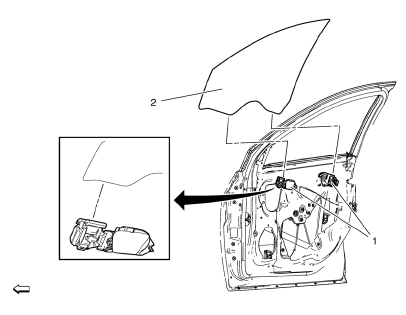
Preliminary Procedure
- Position the window approximately half way down in the door.
- Remove the water deflector. Refer to Front Side Door Water Deflector Replacement.
- Remove the outer sealing strip. Refer to Front Side Door Window Outer Sealing Strip Replacement.
- Front Side Door Window Regulator Sash Nut (Qty: 2)
Caution: Refer to Fastener Caution in the Preface section.
Tighten 9 N·m (80 lb in)
- Front Side Door Window
Procedure
- Loosen the window regulator sash nuts, pull upward to release the window from the sash.
- Rotate the front door window as necessary to remove it from the door.
 Front Side Door Window Adjustment
Warning: Refer to Glass and Sheet Metal Handling Warning in the Preface
section.
Warning: Refer to Express Window Down Warning in the Preface section.
Preliminary Procedure
Remove the fr ...
 Rear Side Door Window Adjustment
Warning: Refer to Glass and Sheet Metal Handling Warning in the Preface
section.
Warning: Refer to Express Window Down Warning in the Preface section.
Preliminary Procedures
Remove the r ...
Other materials:
Front Floor Panel Carpet Replacement
Preliminary Procedures
Remove front seats. Refer to Driver or Passenger Seat
Replacement.
Remove rear seat. Refer to Rear Seat Replacement.
Remove the front floor console. Refer to Front Floor Console
Replacement.
Remove front sill panels. Refer to Front Side Door Sil ...
Instrument Panel Compartment Replacement
Preliminary Procedure
Remove the instrument panel outer trim cover - right side. Refer to
Instrument Panel Outer Trim Cover Replacement - Right Side.
Instrument Panel Compartment Screw (Qty: 5)
Caution: Refer to Fastener Caution in the Preface section.
Tighten
2.5 N·m (22 lb in)
...
Rear Compartment Lid Replacement
Preliminary Procedure
Remove the rear compartment lid inner panel trim. Refer to Rear Compartment
Lid Inner Panel Trim Replacement.
Rear Compartment Lid Hinge Bolt (Qty: 4)
Caution: Refer to Fastener Caution in the Preface section.
Tighten
9 N·m (80 lb ft)
Rear Compartment Lid
...
