
Chevrolet Cruze Repair Manual: Installation Procedure
- Clean and prepare the attaching surfaces for welding.
- Apply structural adhesive to the attaching surfaces.
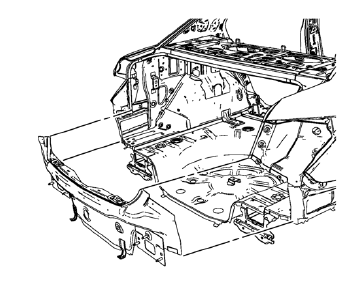
- Position the body rear end panel on the vehicle.
- Verify the fit of the body rear end panel.
- Clamp the body rear end panel into position.
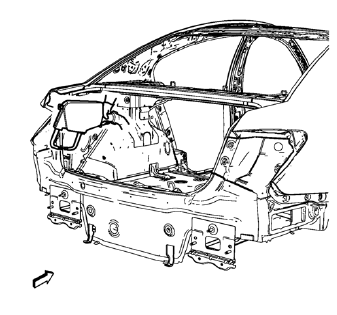
- Spot weld accordingly as noted from the original part.
- Apply the sealers and anti-corrosion materials to the repair area, as necessary. Refer to Anti-Corrosion Treatment and Repair.
- Paint the repaired area. Refer to Basecoat/Clearcoat Paint Systems.
- Install all related panels and components.
- Connect the negative battery cable. Refer to Battery Negative Cable Disconnection and Connection.
- Enable the SIR system. Refer to SIR Disabling and Enabling.
 Removal Procedure
Warning: Refer to Approved Equipment for Collision Repair Warning in the
Preface section.
Warning: Refer to Glass and Sheet Metal Handling Warning in the Preface section.
Disable the SIR Syst ...
 Rear Bumper Impact Bar Stud Plate Replacement (MAG-Welding)
Note: According to different corrosion warranties, only the
regional mandatory joining methods are allowed. ...
Other materials:
Reduced Engine Power Light
The reduced engine power light should come on briefly as the engine is started.
If it does not come on, have the vehicle serviced by your dealer.
This light, along with the malfunction indicator lamp, displays when a noticeable
reduction in the vehicle's performance occurs. Stop the vehic ...
Rear Side Door Weatherstrip Replacement - Body Side
Rear Side Door Weatherstrip - Body Side
Procedure
Start at the front upper corner of the door opening and pull the
weatherstrip away from the door opening flange.
Position the weatherstrip in the upper corner of the center pillar.
Working downward along the front edge, in ...
SIR Service Precautions
SIR Service Precautions
Warning: When performing service on or near the SIR components or
the SIR wiring, the SIR system must be disabled. Failure to observe
the correct procedure could cause deployment of the SIR components. Serious
injury can occur. Failure to observe the correct procedure
...
