
Chevrolet Cruze Repair Manual: Removal Procedure
Warning: Refer to Approved Equipment for Collision Repair Warning in the Preface section.
Warning: Refer to Glass and Sheet Metal Handling Warning in the Preface section.
- Disable the SIR System. Refer to SIR Disabling and Enabling.
- Disconnect the negative battery cable. Refer to Battery Negative Cable Disconnection and Connection.
- Remove all related panels and components.
- Visually inspect the damage. Repair as much of the damage as possible.
- Remove the sealers and anti-corrosion materials from the repair area, as necessary. Refer to Anti-Corrosion Treatment and Repair.
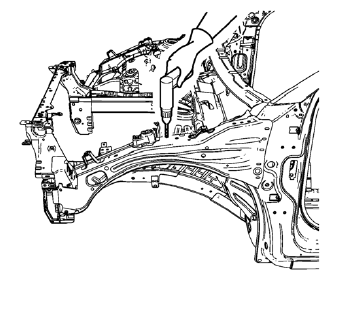
- Locate and mark all the necessary factory welds and weld seams of the front compartment upper side rail.
- Drill all factory welds. Note the number and location of welds for installation of the service assembly.
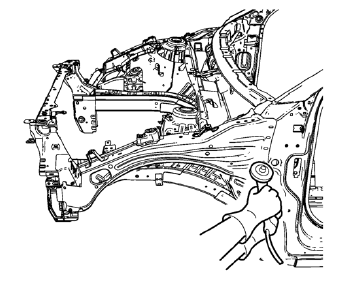
- Grind factory weld seams.
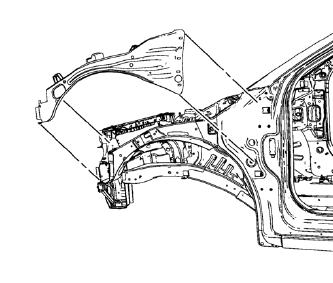
- Remove the front compartment upper side rail.
 Front Compartment Upper Side Rail Replacement (MAG-Welding)
Note: According to different corrosion warranties, only the
regional mandatory joining methods are allowed. ...
 Installation Procedure
Drill 8 mm (5/16 in) for plug welding along the edges of the front
compartment upper side rail as noted from the original panel.
Clean and prepare the attaching surfaces for welding. ...
Other materials:
Removal Procedure
Warning: Refer to Approved Equipment for Collision Repair Warning in the
Preface section.
Warning: Refer to Collision Sectioning Warning in the Preface section.
Warning: Refer to Glass and Sheet Metal Handling Warning in the Preface section
Disable the SIR System. Refer to SIR ...
Front Fog Lamp Replacement
Preliminary Procedures
Raise and support the vehicle. Refer to Lifting
and Jacking the Vehicle.
Remove the front bumper fascia. Refer to Front Bumper Fascia
Replacement.
Disconnect fog lamp bulb socket electrical connector.
Front Fog Lamp Screws (Qty: 3)
Caution: Refer t ...
Installation Procedure
Drill 8 mm (5/16 in) for plug welding along the edges of the tail lamp
pocket as noted from the original panel.
Note:
Clean and prepare the attaching surfaces for welding.
Position the tail lamp pocket on the vehicle.
Verify the fit of the tail lamp pocket.
Clamp ...
