
Chevrolet Cruze Repair Manual: Installation Procedure
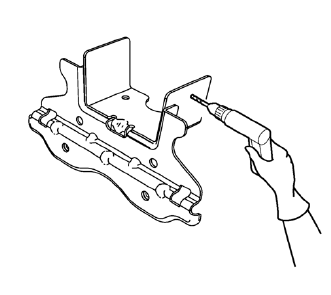
- Create 8 24 mm (5/16 x 15/16 in) slots for MIG-brazing along the edges of the underbody rear side rail reinforcement as noted from the original panel.
- Clean and prepare the attaching surfaces for brazing.
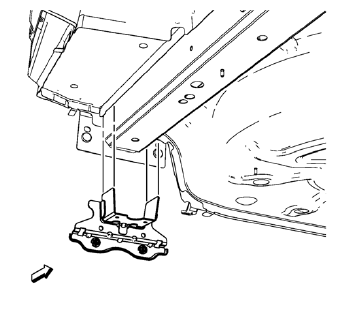
- Position the underbody rear side rail reinforcement on the vehicle.
- Verify the fit of the underbody rear side rail reinforcement.
- Clamp the underbody rear side rail reinforcement into position.
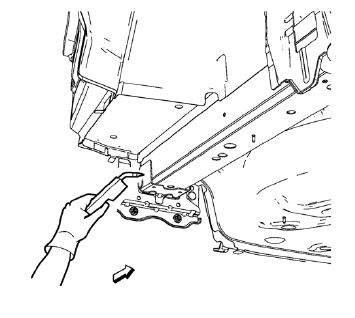
- Braze accordingly.
- Apply the sealers and anti-corrosion materials to the repair area, as necessary. Refer to Anti-Corrosion Treatment and Repair.
- Paint the repaired area. Refer to Basecoat/Clearcoat Paint Systems.
- Install all related panels and components.
- Connect the negative battery cable. Refer to Battery Negative Cable Disconnection and Connection.
- Enable the SIR system. Refer to SIR Disabling and Enabling.
 Removal Procedure
Warning: Refer to Approved Equipment for Collision Repair Warning in the
Preface section.
Warning: Refer to Glass and Sheet Metal Handling Warning in the Preface section.
Disable the SIR Syst ...
 Rear Floor Panel Filler Replacement (MAG-Welding)
Note: According to different corrosion warranties, only the
regional mandatory joining methods are allowed. ...
Other materials:
Removal Procedure
Warning: Refer to Approved Equipment for Collision Repair Warning in the
Preface section.
Warning: Refer to Collision Sectioning Warning in the Preface section.
Warning: Refer to Glass and Sheet Metal Handling Warning in the Preface section.
Disable the SIR System. Refer to SIR Dis ...
Exhaust Flexible Pipe Replacement (1.6L LXT)
Removal Procedure
Warning: Refer to Hot Exhaust System Warning in the Preface section.
Warning: Refer to Protective Goggles and Glove Warning in the Preface section.
Open the hood.
Raise the vehicle by its full height. Refer to Lifting and Jacking the
Vehicle.
Remove the heate ...
Map Data Updates
The map data in the vehicle is the most up-to-date information available when
the vehicle was produced. The map data is updated periodically, provided that the
map information has changed.
For questions about the operation of the navigation system or the update process,
contact the GM Nav Dis ...
